
3 Hours vs 40 Minutes: What Actually Matters in a Handmade Leather Wallet
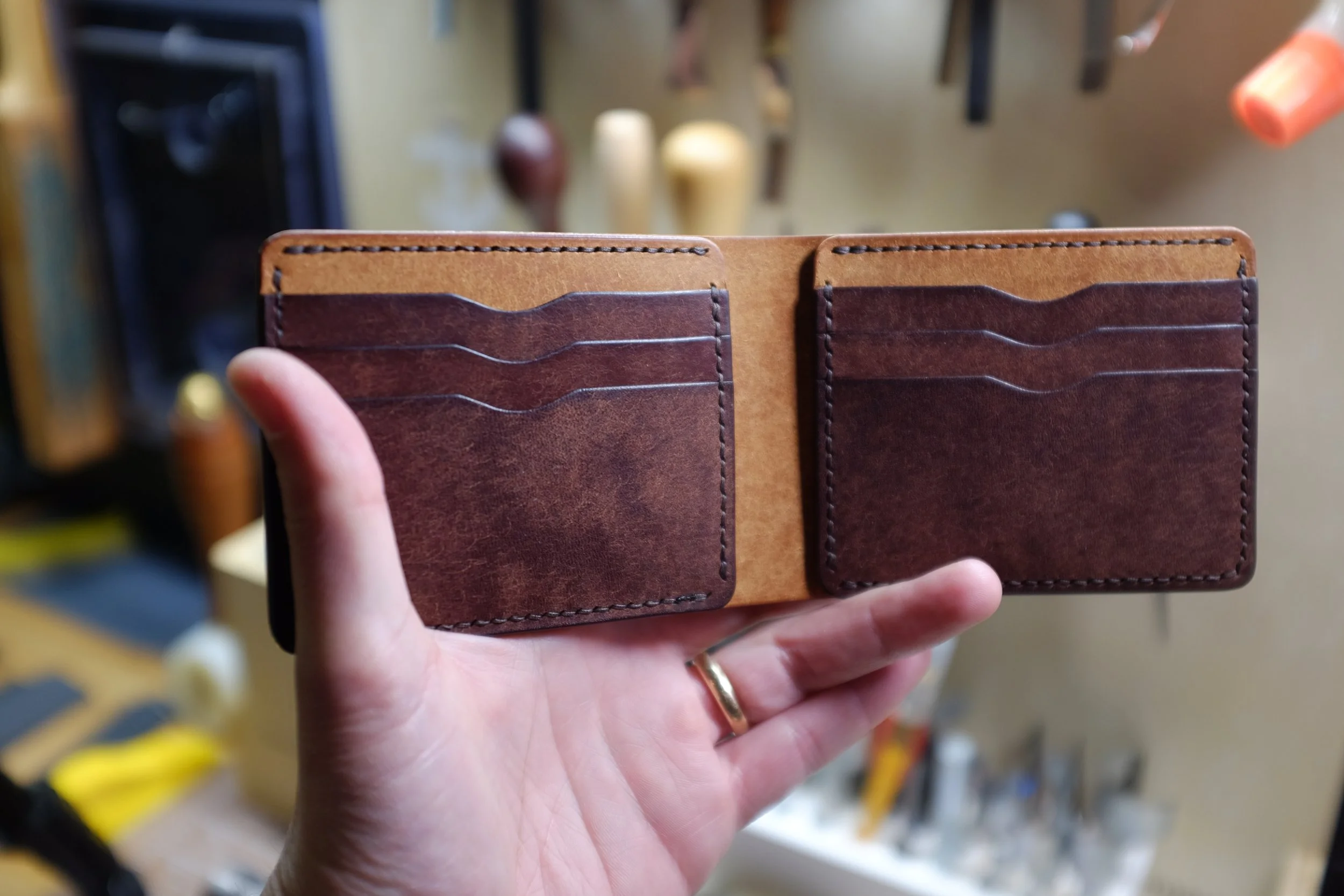
A typical classic bifold takes roughly 3 hours to make.
This wallet takes me about three hours to make.
That time is spent on things most people will never consciously notice. Edges are beveled and burnished until they feel smooth in the hand. The leather is skived down so it folds the way it should. Every stitch is placed by hand, not because it’s the fastest way to do it, but because it’s the way that holds up over time.
It’s a slow process. Intentionally so.
But I wanted to see what would happen if I stripped all of that away.
What if I took the same full-grain leather, kept the same basic design, and removed everything that makes it… refined? No edge finishing. No burnishing. No skiving. No hand stitching. Just cut the pieces, glue them together, run them through a sewing machine, and call it done.
The goal wasn’t to make something beautiful. It was to see how fast I could make something functional.
The answer, it turns out, is about 40 minutes.
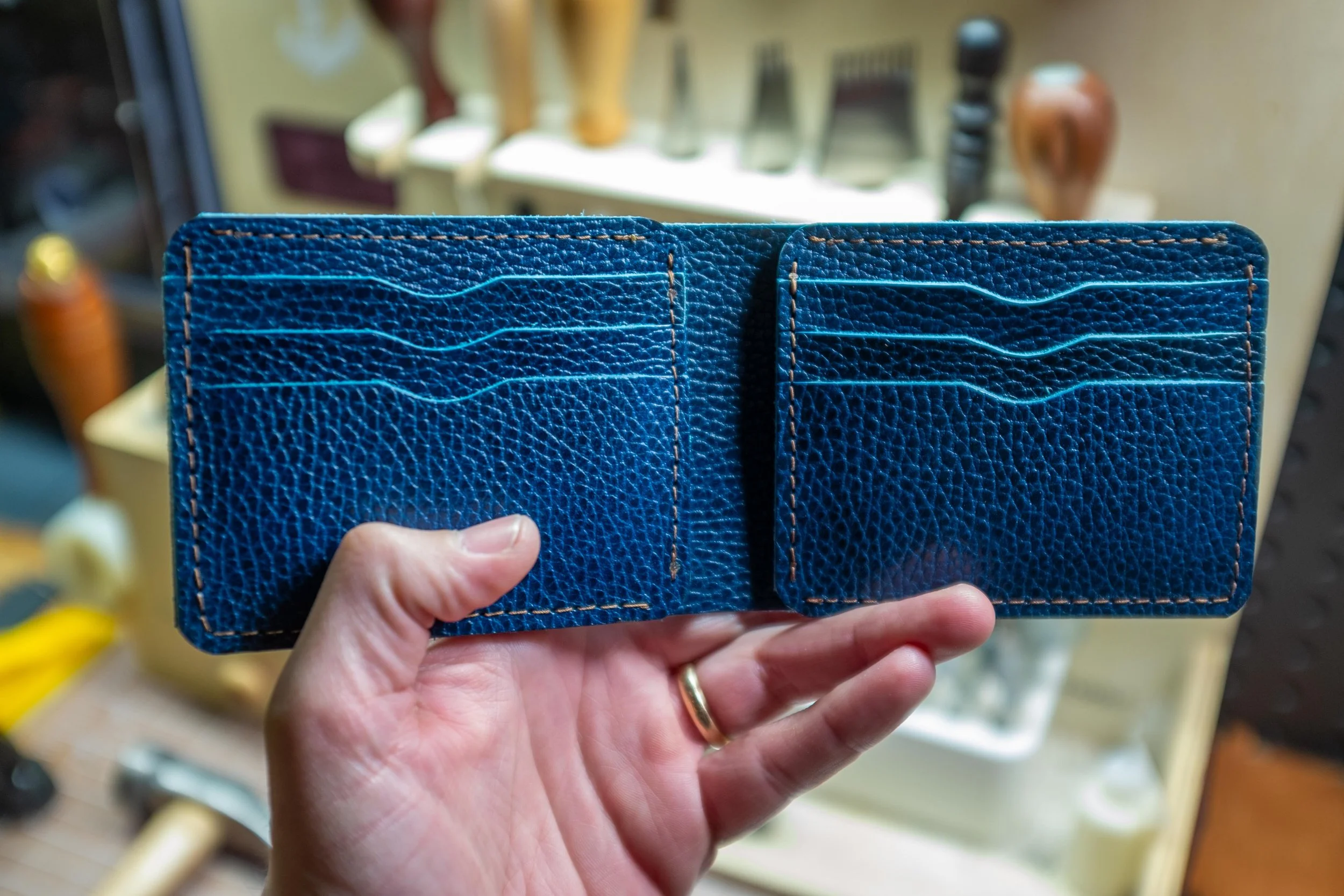
Rough, but functional.
And to be fair, the result works. It holds cards. It’s structurally solid. In fact, it’s probably overbuilt in a way that makes it feel almost indestructible. You could run it over with a car and it would likely come out just fine.
But the moment you pick it up, the difference is obvious.
It’s thicker. Rougher. The edges feel unfinished. It lacks the balance that comes from shaping and refining each piece before it’s assembled. It does the job, but it doesn’t feel good doing it.
That’s the part that’s harder to explain until you experience it.
There’s a lot of attention placed on full-grain leather wallets, and for good reason. Full-grain leather is the highest quality cut, and when it’s vegetable-tanned, it develops a patina that only gets better with time. But material is only part of the equation. This experiment made that clear pretty quickly.
You can take great leather and rush the process, and what you end up with is something that feels incomplete. Not broken. Not unusable. Just… unfinished.
The three-hour version tells a different story. The edges are smooth. The profile is slimmer because the leather has been thinned where it needs to be. The stitching sits clean and even. It feels intentional. More importantly, it feels like something you’d actually want to carry every day.
That difference doesn’t come from the leather alone. It comes from the time spent working it.
There’s a reason handmade leather wallets made in the USA aren’t churned out in minutes. It’s not inefficiency. It’s a choice. Every step in the process shapes how the wallet breaks in, how it sits in your pocket, and how it holds up over years of use.
Could I make wallets in 40 minutes? Sure. This proved that.
Would I ever sell one like that? No.
Not because it wouldn’t work, but because it wouldn’t represent what I want Coastline to stand for.
There’s probably a market for raw, rugged wallets that skip the finishing process entirely. Some people might even prefer that look and feel. But for me, the details aren’t optional. They’re the product.
This experiment didn’t really teach me anything new. It just confirmed something I already knew.
You can make a wallet fast.
Or you can make a high-quality, handmade full-grain leather wallet that’s actually worth carrying.
